Philadelphia Union
Slow start put Union behind early in playoff exit

Where do we begin?
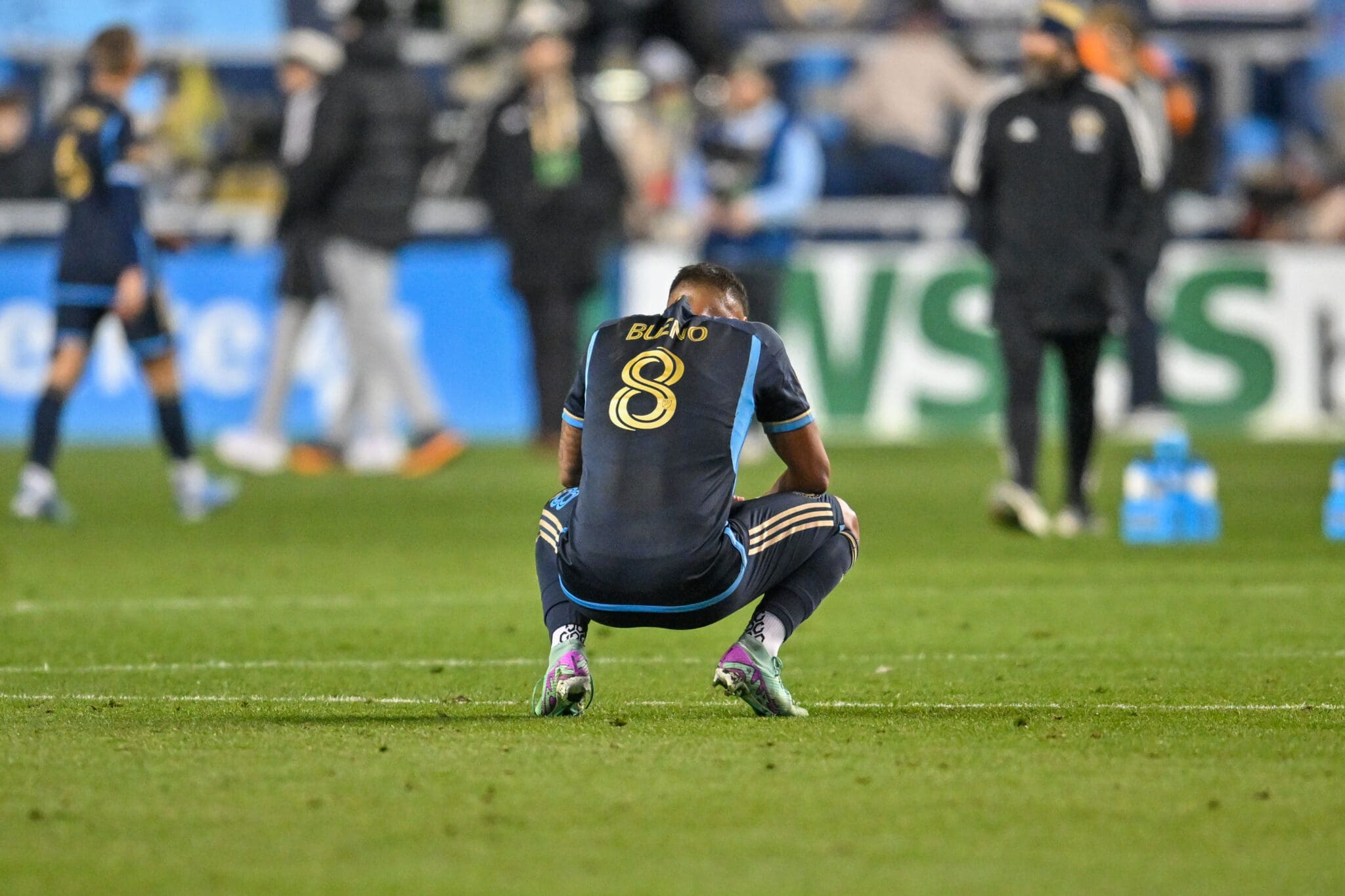
The Union crashed out of the MLS playoffs in the Eastern Conference Semifinals Sunday night, falling to New York City FC 1-0 at Subaru Park. This was the second time in five seasons the Union won the Supporters’ Shield and failed to advance to the conference finals.
Was winning the Cup too big of an ask?
Since 2012, only two Shield winners have gone on to win MLS Cup. The last team to accomplish the Shield-Cup double was LAFC in 2022. Prior to that, Toronto won both in 2017. Shield winners have only been successful winning MLS Cup eight times in the league’s history, beginning in the early days of D.C. United, who pulled it off twice in three years from 1997 to 1999. That’s a roughly a 27% chance if my math serves me right.
After playing like one of the best teams in the league for most of the season, it’s hard to say anyone saw this coming. But maybe not.
Entering Sunday night, the Union had last played a game on November 1st when they beat Chicago 3-0 on the road in Game 2 of the First Round. They looked good doing it. Aided by a few early miscues from Chicago keeper Jeffrey Gal, the Union cruised into the Eastern Conference semifinals with ease.
But a lot can happen after 22 days.
While New York stormed back to knock off Charlotte on the road in their Game 3 matchup, the Union were training. Then came the 10-day international break, with multiple players joining their nationals teams, including Danley Jean-Jacques and Andre Blake. Danley’s Haiti side qualified for the 2026 World Cup while Blake’s Jamaica reached the FIFA playoffs. Tai Baribo, Quinn Sullivan, Nathan Harriel, Cavan Sullivan, and Jesus Bueno all missed time throughout the season to play for their respective national teams, and Frankie Westfield recently returned from playing in the U-20 World Cup in late September and October. Something could be said for the impact of travel, irregular routines, and incomplete squads ahead of major games.
The Union had not been good after returning from an international break at the end of the season.
In March, the Union played through the international break, jumping out to a 5-0 start, but they suffered their first loss on the road to Miami 2-1. In early June, the Union returned from the break with a 2-1 win over Charlotte.
In late June and early July, the Union played through the Concacaf Gold Cup, going 2-2 without Blake, Baribo, Harriel, Sullivan, and Danley, among others at different times.
Later in the season, their results after the break became more noticeable. In September, the Union returned from the break with two of their worst performances of the season. They got stomped by Vancouver 7-0 then lost to Nashville 3-1 in the U.S. Open Cup semifinals. Both games were played on the road, and in both games the Union played nothing like the team they’d been for most of the season.
In October, with the Supporters’ Shield locked up following a win against NYCFC, the Union returned from the break and lost to Charlotte 2-0 on the road. Once again, they appeared to be going through the motions.
Sunday, once again, coming off a break, the Union showed rust.
“The gap of 22 days is pretty tough to bridge, to stay in your rhythm,” Union coach Bradley Carnell acknowledged after the game. “We gave ourselves the best possible chance to do it, but the best practice is playing a game.”
Though Carnell said the layoff was not an excuse, it certainly played a role.
“It’s not ideal to have a three week break in the playoffs,” Milan Iloski said after the game. “We said in the beginning we were trying to treat it like in the preseason. So it’s definitely not ideal to sweep a team in the first round and feel like you get punished.”
A slow start didn’t help.
The visitors from New York pinned the Union back a number of times in the early minutes, rattling the post on a shot by Nicolás Fernandez in the 15th minute. Even after Bruno Damiani nearly squeezed an opener past Matt Freese, New York remained the more comfortable, hungry team in the game’s first half.
“We weren’t ourselves,” Iloski said. “It was more on us than on them. To be honest, we were prepared. We just didn’t play up to our standards.”
New York finally punished the Union.
In the 27th minute, New York broke the Union lines with ease down the right side, and Augustín Ojeda was left one-on-one with Olewethu Makhanya. The New York winger beat Makhanya to the inside and slipped a pass to Fernandez, who had time and space at the top of the box to find Maxi Moralez streaking through the line. The former MLS MVP knew exactly what to do next, beating Blake to the far post for the game’s only goal. Jakob Glesnes faces some responsibility for allowing so much time on the ball and Harriel as well for being caught watching. Instead, the Union defenders froze in the situation, and the aggressors were rewarded.
https://x.com/phlsoccernow/status/1992768451774201870
Another factor that impacted the Union’s slow start was the tactical positioning of New York, countering Carnell’s press by playing a 4-2-4 and pushing all four attacking players high against the Union backline. The tactic stretched the Union in many ways. With Harriel and Wagner forced to stay back, New York found outlets out wide, breaking the Union’s front four fan shape with ease. And whenever New York played long, New York appeared to win every second ball, with nothing stopping them from breaking the Union’s defensive structure.
“Teams overload our back line all the time,” Carnell said. “With our ball-oriented defending, we just had a little bit of a struggle with the overload central with Moralez popping in a little and floating between the lines. They know our sixes are going to jump. I thought we could have connected a bit. We corrected it at the second half, and I thought we had way more turnovers. We were way more active against the ball, then with a slight change in the midfield, we started to then assert a little bit more dominance. But it’s not the first time teams flood the backline.”
By the second half, however, the Union’s pressure changed because it needed to. New York controlled the early moments of the half, but it wasn’t until Fernandez sent Blake sprawling on a shot from midfield that the game really took a turn. Blake’s miraculous save to keep the game within reach aggravated a hamstring injury, forcing the longtime Union keeper off in favor of Andrew Rick. At the same time, Carnell inserted Mikael Uhre for Tai Baribo and Frankie Westfield for Jovan Lukic. The Union played the final thirty minutes without their leading scorer and with an outside back in an attacking role, pushing Indiana Vassilev back as a holding midfielder.
Forced to chase the game, the Union found an equalizer difficult.
“They were defending really well, covering each other” Uhre said after the game. “So if you beat one, the other was right there to step, and they were good at keeping the ball, holding up the ball when they finally won it and putting us in some awkward positions.”
“You have to start thinking outside the box,” Carnell said. “There’s only 20 minutes left, and you have to think what’s the best structure. And we thought a 4-1-3-2 still gave us a little bit more shape, width, vertically combating for the second balls as we started to go ma bit more direct.”
The Union’s best chances came at the end. Westfield got on the end of two crosses in behind. On the first attempt in the 74th minute, he hit New York keeper Matt Freese from close range, though most will credit Freese with the save. In the 87th minute, Westfield found a similar space but put a difficult volley over the bar. And it wasn’t until Iloski forced Freese into making a fingertip save in stoppage time that the Union really ran out of hope.
The loss spoils what had otherwise been an unexpected return to glory for the Union. Picked to be middle of the table by most experts at the start of the season, the Union found a way to play their style effectively for most of the season. Their record against top MLS teams not named FC Cincinnati (0-6-2 vs Vancouver, Miami, Nashville, and Columbus) may have predicted their ceiling in the playoffs, but with home-field advantage all the way to the MLS Cup, many were hoping to see the Union raise their first Cup on home soil.
In the end, a slow start and a hectic ending was not in this team’s DNA. And as the Union head into the offseason with many questions, among them the future of Sporting Director Ernst Tanner at the top of the list, Carnell and his team will be back to work in less than two months seeking to answer how the Union can win their first MLS Cup.